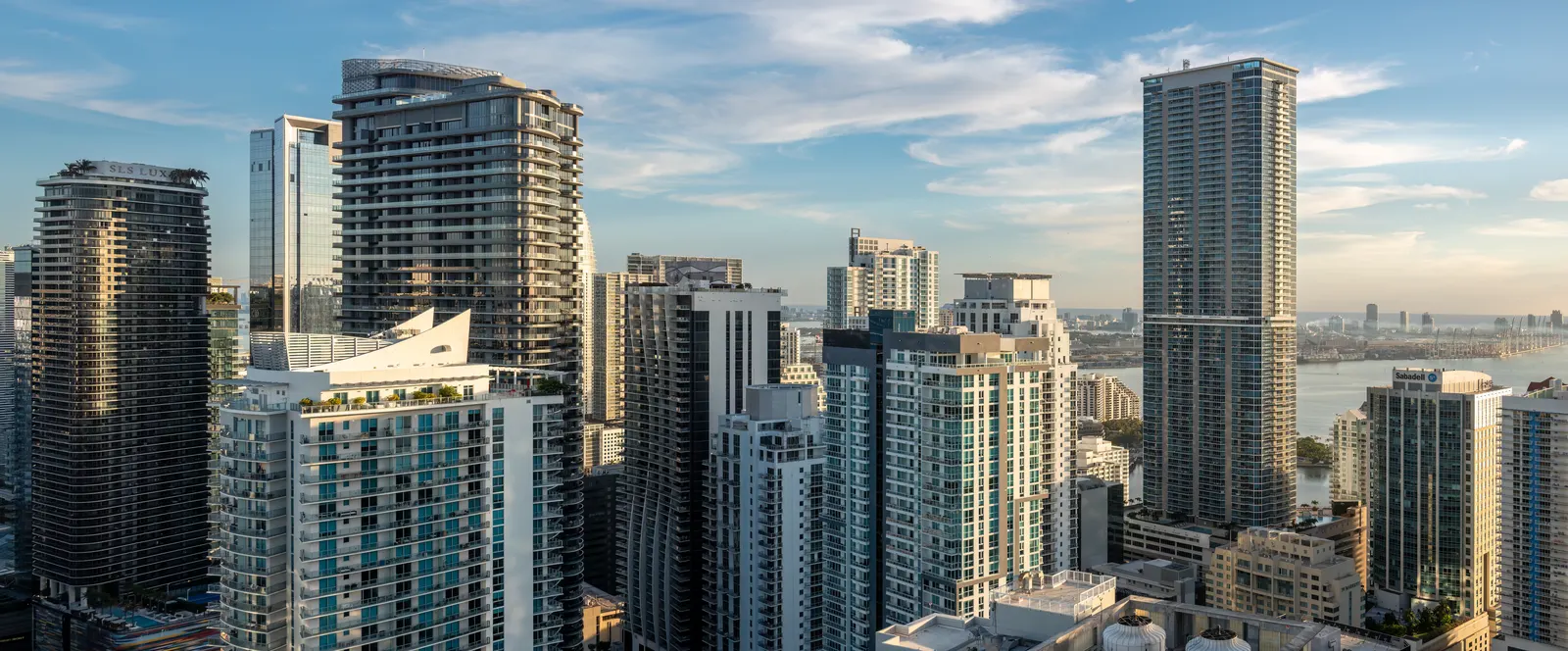
Short answer: To host stays under 30 nights in Miami you need a Florida vacation rental license, state and county tax accounts, and approval from the local government where the home sits. The City of Miami bars short stays in single-family homes and duplexes in T3 and T4-R zones. Miami Beach bans stays under six months and one day in all single-family homes. Unincorporated Miami-Dade requires a yearly Certificate of Use.
This guide covers Miami-Dade County. For the wider region, including Fort Lauderdale and Hollywood in Broward County, start with our South Florida guide. Nothing here is legal advice, so confirm each step with the office named before you list.
Step 1: Find out which government has the final say
"Miami" on a mailing address can mean the City of Miami, Miami Beach, another city inside the county, or unincorporated Miami-Dade. Each one writes its own rental rules. The county's vacation rental ordinance covers only unincorporated areas, so a home inside a city follows that city's rules. Your property tax bill shows which one you are in.
Then read your condo or HOA documents. A building can ban short stays even where the city allows them, and the City of Miami requires the association to sign your paperwork.
Step 2: State license and tax accounts
Everyone in the county needs these, whatever the city.
- A vacation rental license from the Florida DBPR if you rent the whole unit more than three times a year for under 30 days. One unit costs $170 a year, plus a $50 application fee the first time.
- A sales tax account with the Florida Department of Revenue. The state rate is 6%, and Miami-Dade adds a 1% surtax.
- A county tourist tax account through TouristExpress. Miami-Dade charges 6% on stays of six months or less, per the county tax page. In Miami Beach the local rate is 7%, and in Surfside and Bal Harbour it is 4%, per the state's rate table.
County returns are due on the 1st and late after the 20th of the next month. You file even in a month with no bookings. A late return costs 10% of the tax owed each month, with a $50 minimum that applies even when no tax is due.
Step 3: City of Miami approval
The city treats short stays as lodging, and its procedures page sets out a full conversion. Single-family homes and duplexes in T3 and T4-R zones are not eligible. Other single-family homes are reviewed case by case. For an apartment or condo, the order is:
- Confirm zoning and pull the building's current Certificate of Occupancy and Certificate of Use. Without an active Certificate of Use you can't start.
- Fill in the city's evaluation form and an operational management plan, both signed by the association. The plan covers front desk, a 24-hour contact, guest access and housekeeping.
- Apply for a building permit in iBuild, upload everything to ProjectDox, and pass plan review and inspections.
- Get a new Certificate of Occupancy, then your DBPR license, then a new Certificate of Use for lodging and a Business Tax Receipt.
You can't host until all of those are in hand. The Certificate of Use and the receipt renew every year, and a lapsed Certificate of Use is revoked. If more than 25% of a building's units are transient, the whole building must meet hotel building standards.
Step 4: Miami Beach approval
Miami Beach defines a short-term rental as any stay under six months and one day. Its rental page says these are banned in all single-family homes and in many apartment and condo districts. The city publishes a zoning map and a list of apartment buildings where they are allowed. In those places you register the property in the city's Citizen Access Portal, get a Vacation/Short-Term Rental Business Tax Receipt and a Resort Tax account, and show both numbers in every listing.
Step 5: Unincorporated Miami-Dade
Outside any city, county code Section 33-28 applies to any stay under 30 days. You need a Certificate of Use, renewed every year, and the home is inspected when it is issued and renewed. You can list as soon as you apply, unless the application is later rejected. The ordinance also sets these rules:
- Overnight, at most two guests per bedroom plus two, up to 12 (children under 3 don't count).
- No more than two guest vehicles, parked in the driveway or in front of the home.
- No outdoor amplified sound at any time.
- A responsible party who answers 24 hours a day, a guest register the county can inspect, and the certificate posted inside where guests see it.
- In areas planned as Estate or Low Density residential, the responsible party must live in the home more than six months a year.
- A home with three or more violations in 12 months needs a $10,000 bond to keep its certificate.
Why cities can still say no
Florida law, Statute 509.032(7)(b), stops local governments from banning vacation rentals or limiting how long or how often they are rented. Rules adopted on or before June 1, 2011 are exempt, which is why Miami and Miami Beach can still keep short stays out of many homes. No 2026 bill changed that. The one vacation rental bill that moved this year, SB 658 on pool safety, died in the House in March.
Where we come in
We handle the license and tax setup, read the association documents, track every filing date and show the right numbers on each listing. Our fee is 15% of booking revenue, and we reply within one day. Across the homes we've run we've hosted more than 8,000 stays with a 4.8 star rating. If nightly stays aren't allowed at your address, we'll tell you so and look at whether stays of a month or more make sense instead. Call (689) 407-2095 or use our contact page.